What Is Single vs Double Flame Roasting? A Simple Explanation
Most snack brands say their products are roasted. Very few explain how. When you look at the manufacturing process, the method used to apply heat makes a real difference to the texture, consistency and quality of the finished product. This article explains the difference between single vs double flame roasting, why it matters and what it means for brands building on a contract manufacturing model.
![]()
What Is Single Flame Roasting?
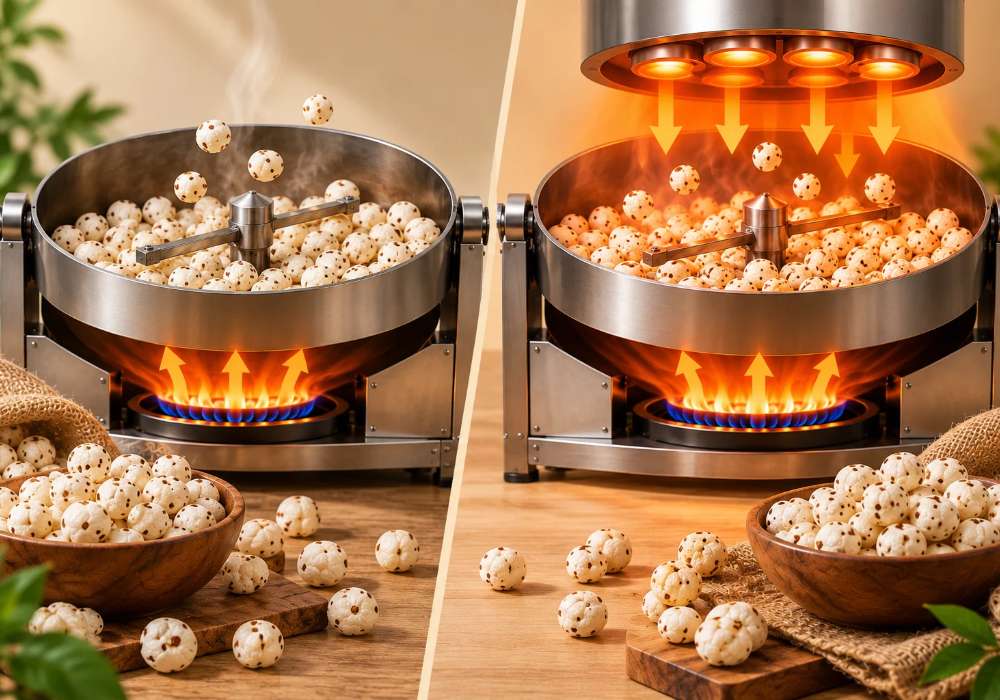
Single flame roasting is the standard approach used by most conventional roasting equipment. Heat is applied from one direction, typically from below, and the product moves through the roasting chamber on a conveyor or drum. The limitation is straightforward. If heat only comes from one side, the product does not cook evenly. Pieces that face the heat source longer get more of it. Pieces that are stacked, overlapping or positioned away from the heat element get less. At small batch sizes this is manageable. You can adjust, flip or monitor the product manually. At commercial scale, with thousands of pieces moving through at the same time, the inconsistency becomes a consistent problem. The result is a batch where some pieces are perfectly roasted, some are under-roasted and some are over-roasted. For a branded snack product, that variation shows up in every pack the customer opens.What Is Double Flame Roasting?
Double flame roasting addresses the core limitation of the single flame method. Instead of applying heat from one direction, the product moves through a process where heat comes from two sources simultaneously. One from below, one from above. Each piece gets even heat on all sides at the same time. The effect is more controlled, more even cooking across the entire batch. Pieces do not need to be repositioned or flipped to compensate for an uneven heat source. The temperature reaches every surface at the same rate, which means the finished product comes out with a consistent texture regardless of where in the batch it sat during roasting. This is the method used at Purva Bites across all flavoured Makhana and Khakhra production.Why Does the Difference Matter?
Texture consistency is the most visible outcome. If you have eaten a bag of roasted Makhana where some pieces were perfectly crunchy and others were soft or chewy, you have experienced what uneven heat does at the consumer level. The same variation affects how flavour coatings set, since a properly roasted surface absorbs seasoning differently from an under-roasted one. Beyond texture, even heat means you are not over-roasting some pieces to compensate for under-roasted ones. Over-roasting degrades the nutritional value of the product and can introduce an unwanted bitter note. Under-roasting leaves moisture in the product, which shortens shelf life and affects the eating experience. For brands, these are not just quality control details. They are customer experience decisions. A customer who gets a consistent product comes back. A customer who gets an uneven product starts looking at alternatives.What It Means for Clean-Label Snack Positioning?
Both methods can be done without added oil. The roasting method does not by itself determine whether a product is fried or oil-roasted. However, the two-direction heat setup makes it easier to achieve the clean, even result associated with dry-roasted snacks without relying on oil to help with heat distribution. At Purva Bites, no palm oil is added at any stage of the roasting process. The dry heat from two directions gives the product its crunch without any added fat. This matters for private label brands positioning their product as roasted, not fried, because the claim is backed by a process that delivers a genuinely clean ingredient list.Single vs Double Flame Roasting: A Side-by-Side View
Single flame roasting applies heat from one direction, typically from below. It is the standard in most conventional equipment. Results depend on batch size, product density and how the equipment manages airflow. At commercial scale, inconsistency is a common outcome. Double flame roasting applies heat from two directions at the same time. It requires specific equipment and produces more even cooking across every piece in the batch. The result is consistent texture, better flavour coating adhesion and a cleaner product with a longer stable shelf life.What to Ask When Choosing a Manufacturer
If you are choosing a contract manufacturer for a roasted snack product, it is worth asking specifically how they roast. The answer tells you more than a general claim of being FSSAI certified or ISO compliant. Ask whether the facility uses single or double flame roasting. Ask for a sample batch and pay attention to texture consistency across different pieces in the same pack. An uneven sample is a preview of what your customers will receive at scale.How Purva Bites Manufactures
Every flavoured Makhana and Khakhra at our Udaipur facility goes through the double flame roasting process. No palm oil is used at any stage. The result is consistent crunch, even seasoning distribution and a clean ingredient list across every batch. If you are planning a private label Makhana or Khakhra range and want to understand more about our manufacturing process, get in touch. Contact us to discuss your requirementFrequently Asked Questions
What is the difference between single vs double flame roasting?
Single flame roasting applies heat from one direction, which results in uneven cooking across a batch at commercial scale. The double flame method applies heat from two directions simultaneously, producing consistent texture in every piece.Does double flame roasting use oil?
No. At Purva Bites, this process uses dry heat only. No palm oil or other oil is added during the roasting step.Why does the roasting method matter for a private label snack brand?
The method affects texture consistency, flavour coating quality and shelf life. A product roasted unevenly gives customers a different experience every time they open a pack. A consistently roasted product builds brand trust and drives repeat purchase.Is double flame roasting used for all Purva Bites products?
All flavoured Makhana and Khakhra manufactured at our Udaipur, Rajasthan facility go through this process.Can I reference the roasting method on my packaging?
If your product is manufactured at Purva Bites, the claim is accurate. Confirm any process references with us before they go on packaging or marketing materialsRelated Articles

Bihar Makhana vs Other Makhana - Why Sourcing Matters for Your Brand
If you are building a private label Makhana brand, one of the first questions worth asking your manufacturer is where their raw Makhana comes…

Why Makhana Is the Fastest Growing Snack Category for Private Label Brands
A few years ago, Makhana was mostly a fasting food. You found it in homes during Navratri, in temple offerings, and occasionally in a…
Private Label vs White Label Manufacturing: What Is the Difference?
If you are planning to launch your own snack brand in India, you will come across these two terms Private Label vs White Label…