Private Label vs White Label Manufacturing: What Is the Difference?
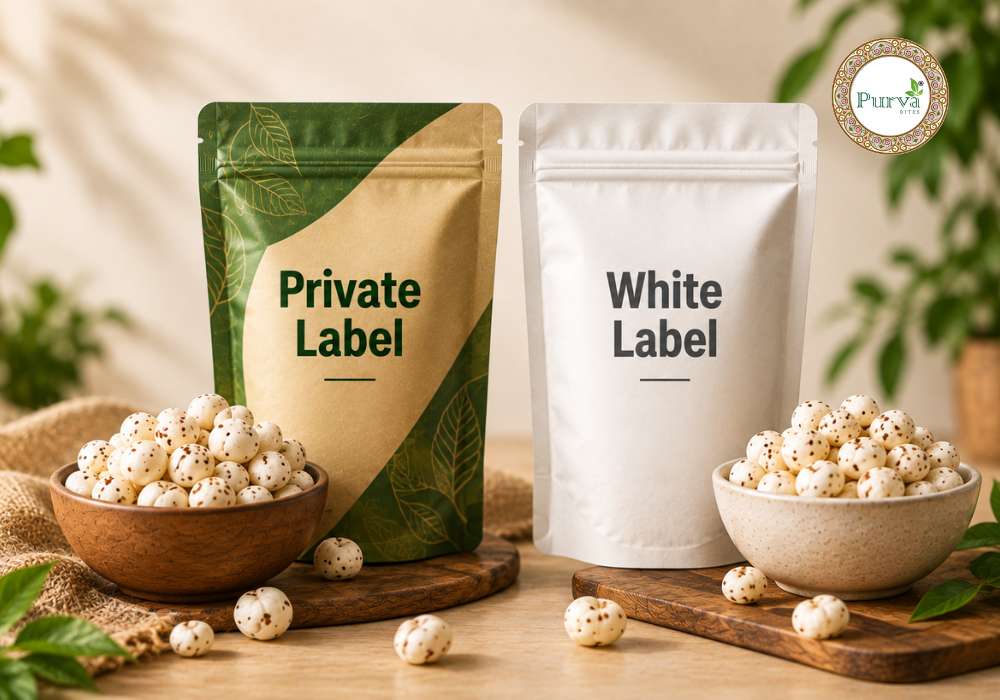
If you are planning to launch your own snack brand in India, you will come across these two terms Private Label vs White Label early. Most people use them interchangeably. They are not the same thing, and the difference matters when you are choosing how to work with a manufacturer.
This article explains both clearly, so you can walk into a manufacturer conversation knowing exactly what you are asking for.
The Short Answer
White label means you take an existing product and put your brand name on it.
Private label means the product is built around your requirements.
That is the core distinction. Everything else follows from it.
Private Label vs White Label - Side by side Difference
What Is White Label Manufacturing?
A white label product already exists. The manufacturer has developed the recipe, tested it, standardised it and is already producing it, often for multiple clients simultaneously. You come in, choose the product, agree on packaging and branding, and go to market under your own name.
The product itself does not change. The same Makhana recipe, the same roasting process, the same flavour profile. What changes is the label on the pack.
White label works well when your goal is speed. You skip the product development phase entirely. You do not need to run trials, adjust recipes or wait for samples from a new formulation. The product is ready. You are essentially choosing from a menu.
It also works well when you are not yet sure whether your brand has legs. Testing a white label product in the market before committing to a custom recipe is a lower-risk way to find out if there is real demand.
The tradeoff is differentiation. If another brand is also using the same white label product from the same manufacturer, your competitive advantage has to come entirely from your branding, your marketing and your distribution. The product itself is not unique to you.
What Is Private Label Manufacturing?
Private label is a more involved relationship. You are not choosing from an existing range. You are working with the manufacturer to develop a product that is specific to your brand.
That might mean a custom flavour. A different pack size. A recipe formulation built around a health claim you want to make. A texture or crunch level that matches your brand positioning. The degree of customisation varies, but the principle is the same. The end product belongs to your brand in a way that a white label product does not.
For the manufacturer, private label requires more investment upfront. Recipe development, trial runs, sample iterations. For the brand, it also takes more time before the first unit ships.
The advantage is ownership. A private label product is harder for a competitor to copy by simply going to the same manufacturer. You have built something specific to your brand, and the manufacturer typically does not offer that exact formulation to other clients.
Which One Should You Choose?
There is no universal answer. It depends on where you are in your brand journey.
If you are just starting out and want to test the market quickly, white label is usually the smarter first step. Launch, sell, learn. If the product works, you can move to a private label version later with the confidence of knowing the category has real demand.
If you already have proof of demand and you are ready to build a brand with a product that is genuinely yours, private label is the right model. It takes longer and costs more to get started, but the result is a product your competitors cannot simply replicate by calling the same factory.
Some brands do both at the same time. White label for a core range they want to launch quickly, private label for a hero product they are developing in parallel.
A Few Questions Worth Asking Before You Decide
- Does the manufacturer already have a product in your category that you would be happy selling? If yes, white label gets you to market faster.
- How important is product exclusivity to your brand story? If your brand positioning is built around a unique recipe or a specific ingredient claim, private label is worth the extra time.
- Do you have budget for recipe development and trial runs? Private label typically requires a sample fee or development cost that white label does not.
- How quickly do you need to be on shelf? White label can move in weeks. A new private label recipe takes months.
What Purva Bites Offers
Purva Bites manufactures Makhana, Khakhra, Roasted Seeds, Roasted Nuts and Extruded Snacks at its FSSAI and ISO certified facility in Udaipur, Rajasthan. Both models are available across the full product range.
For white label, the existing range covers nine roasted Makhana flavours, twelve Khakhra flavours, six seed varieties and ten nut and extruded snack formats. You can brand any of these without waiting for recipe development.
For private label, the team works with you on the flavour profile, pack format and any specific formulation requirements. Custom flavour development is available across all categories.
If you are not sure which model fits your plan, that conversation is worth having before you commit to anything.
Contact us to discuss your requirement
Frequently Asked Questions
Is white label cheaper than private label?
White label typically has a lower upfront cost because there is no recipe development involved. Private label may have a one-time development cost, but the per-unit manufacturing cost is similar once you move into production.
Can I switch from white label to private label later?
Yes. Many brands start with white label to test the market and move to a private label formulation once they have proved demand. A good manufacturer will support both without requiring you to start from scratch.
Does white label mean I cannot change anything about the product?
In most cases, the base recipe stays fixed on a white label product. You choose the branding and packaging. Some manufacturers allow minor adjustments like seasoning level or pack size, but significant recipe changes generally move into private label territory.
Who owns the recipe in a private label arrangement?
This depends on the agreement. In most private label arrangements, the recipe developed specifically for your brand is exclusive to you. Confirm this in writing before you start development.
Can one manufacturer handle both white label and private label for the same brand?
Yes. It is common for brands to have part of their range on white label and part on private label with the same manufacturer. This gives you the speed of white label alongside the exclusivity of private label where it matters most.
Related Articles
Bihar Makhana vs Other Makhana - Why Sourcing Matters for Your Brand
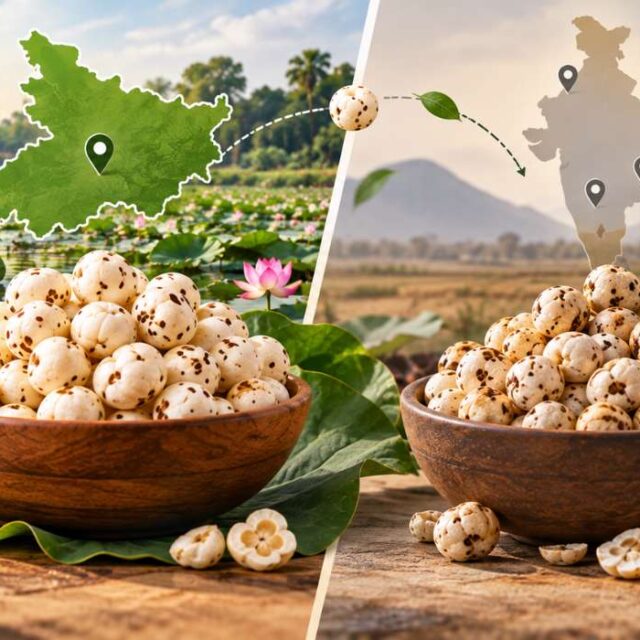
If you are building a private label Makhana brand, one of the first questions worth asking your manufacturer is where their raw Makhana comes…
What Is Single vs Double Flame Roasting? A Simple Explanation
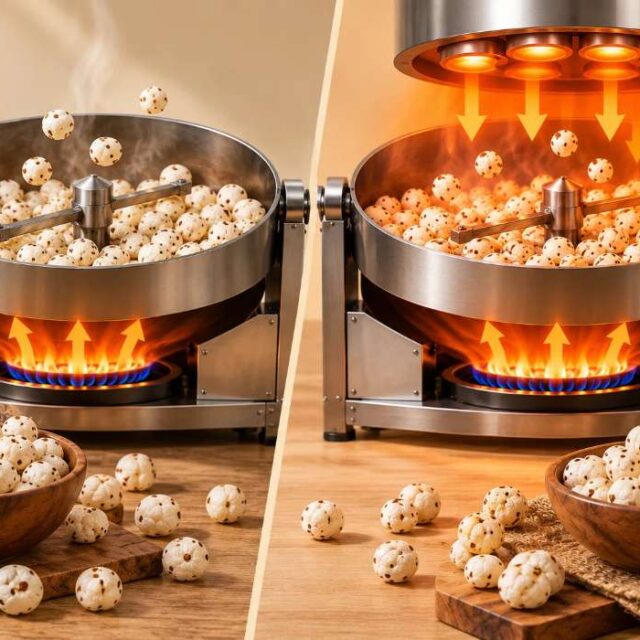
Most snack brands say their products are roasted. Very few explain how. When you look at the manufacturing process, the method used to apply…

Why Makhana Is the Fastest Growing Snack Category for Private Label Brands
A few years ago, Makhana was mostly a fasting food. You found it in homes during Navratri, in temple offerings, and occasionally in a…