Bihar Makhana vs Other Makhana – Why Sourcing Matters for Your Brand
If you are building a private label Makhana brand, one of the first questions worth asking your manufacturer is where their raw Makhana comes from. The answer matters more than most brand founders realise at the start.
Makhana, also called fox nuts or phool Makhana, is now one of the fastest growing snack categories in India. But not all raw Makhana is the same. Where it is grown, how it is harvested and how it is processed before it reaches a manufacturer all affect the quality of the finished product on the shelf.
This article explains what makes Bihar Makhana the quality benchmark in this category, how it compares to Makhana grown in other regions and why sourcing should be part of your brand story, not just a supply chain detail
![]()
Where Makhana Comes From
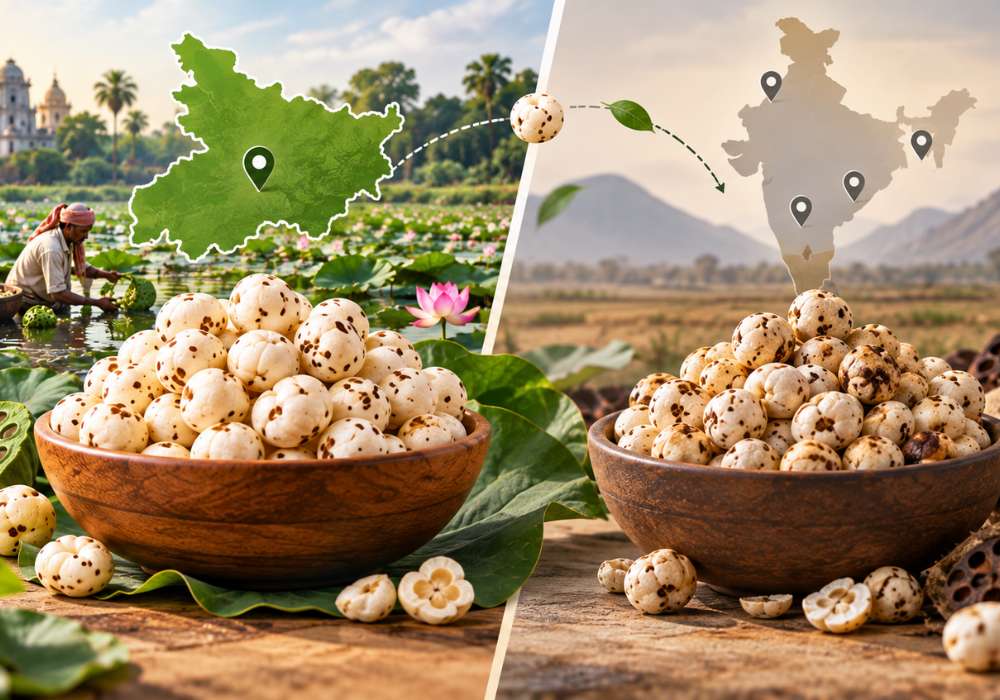
Makhana is the popped and dried seed of the Euryale ferox plant, which grows in shallow ponds, wetlands and lakes. The plant is highly specific about its growing conditions. It needs still or slow-moving water, particular soil conditions and a climate that supports its seasonal growth cycle. Bihar, particularly the Mithilanchal region including Darbhanga, Madhubani, Sitamarhi and Saharsa, has the geography and agricultural ecosystem that has made it the dominant growing region for makhana in India. Farmers in this region have cultivated Bihar Makhana for generations. The harvesting and processing methods are embedded in local agricultural knowledge and passed down across families. Other states in India do grow Makhana, and cultivation has expanded as category demand has grown. However, the scale, the depth of farming knowledge and the specific wetland conditions of Bihar are not easily replicated. The difference in quality between Bihar-sourced Makhana and Makhana from other regions is real and observable in the finished product.What Makes Bihar Makhana Different?
Seed size and uniformity matter to manufacturers and brands alike. Bihar Makhana tends to produce larger, more uniform seeds than Makhana grown elsewhere. Larger seeds pop better, hold flavour coatings more evenly and produce a better texture in the roasted finished product. For a private label brand, this translates directly into consistency from pack to pack, which is what drives repeat purchase. Puffing quality is directly connected to the raw material. Makhana seeds are puffed through a process involving specific heat application. The quality of the raw seed, its moisture content, density and maturity at harvest all affect how well it puffs. Bihar Makhana, when properly harvested and stored, puffs more reliably and with less wastage in the manufacturing process. Flavour profile is subtler but relevant. Properly grown and harvested Makhana has a neutral, clean base that absorbs seasoning well. Poor quality raw material can carry off-notes that compete with seasoning or leave an aftertaste. For a brand built on clean-label positioning, starting with quality raw material is the foundation everything else rests on. Agricultural knowledge in Bihar's Makhana growing communities has been refined over generations. This affects when seeds are harvested, how they are dried, how they are stored before processing and how waste is minimised. That expertise is difficult to transfer to new growing regions quickly.Why Makhana Sourcing Becomes a Brand Story
Most consumers do not know where Makhana comes from. That is an opportunity, not a problem. A brand that sources Bihar Makhana and can say so clearly is giving customers a provenance story that competitors using undifferentiated supply cannot easily match. It is the same principle that works for Darjeeling tea, Alphonso mangoes or Kashmiri walnuts. Regional provenance is a quality signal that is easy for a consumer to understand and trust. For a D2C or modern trade brand, this is back-of-pack copy and social media content that writes itself. Bihar-sourced Makhana. Traditional farming communities. Harvested from India's primary growing region. These are genuine claims that connect the consumer to the product's supply chain in a way they find meaningful. For a distributor or retail buyer, Bihar sourcing is also a quality assurance signal. When a brand can specify its raw material origin, it suggests a manufacturer who is selective about inputs, not one buying from the cheapest available supplier.What to Ask Your Manufacturer About Makhana Sourcing
Not every manufacturer sources raw Makhana exclusively from Bihar. Some blend material from multiple regions. Some cannot specify the origin of their raw material beyond a broad category. Before committing to a manufacturer, ask these questions specifically. Where does your raw Makhana come from? Do you source directly from Bihar farming communities or through intermediaries? What is your quality check process on incoming raw material? How do you handle batches that fall below your standard? A manufacturer who answers these clearly is one who has thought about their supply chain carefully. One who cannot is where your product quality may be inconsistent, even if the initial samples look good. This is also where Makhana sourcing becomes a due-diligence question, not just a branding one. The supply chain affects the product, which affects the brand.How Purva Bites Sources
All raw Makhana used at the Purva Bites facility in Udaipur is sourced from Bihar. We do not blend with Makhana from other regions or use undifferentiated wholesale supply. Raw material comes in, goes through our quality check process and only material that meets our standard goes into production. The roasting and seasoning is done at our Udaipur facility using our double flame roasting process with no palm oil added at any stage. This means the full process from raw material sourcing to finished pack is something we can speak to clearly. If you are building a private label Makhana brand and want a manufacturer who can give you the sourcing clarity your brand needs, get in touch. Contact us to discuss your Makhana requirementFrequently Asked Questions
Why is Bihar considered the best region for Makhana? Bihar's Mithilanchal region has specific geography, wetland ecosystem and multi-generational farming knowledge that produces the highest quality Makhana in India. The seeds are larger, more uniform and puff more reliably than Makhana from other growing regions. Is all Makhana the same regardless of where it comes from? No. Growing region, farming practices, harvest timing and post-harvest handling all affect the quality of the raw seed. These differences carry through to texture, puffing quality, flavour absorption and batch consistency in the finished product. Can I mention Bihar sourcing on my private label packaging? If your product is manufactured by a facility that genuinely sources from Bihar, the claim is accurate. Verify the sourcing claim with your manufacturer and confirm the language before it goes on packaging or marketing materials. Does Purva Bites source Makhana from Bihar? Yes. All raw Makhana used at the Purva Bites facility comes from Bihar. We do not blend with material from other regions. Why does Makhana sourcing matter specifically for a private label brand? Sourcing affects quality consistency across every batch, which directly affects what the customer experiences in every pack. It also gives the brand a provenance story, which is increasingly valuable in the health snack category where consumers want to know where their food comes from.Related Articles
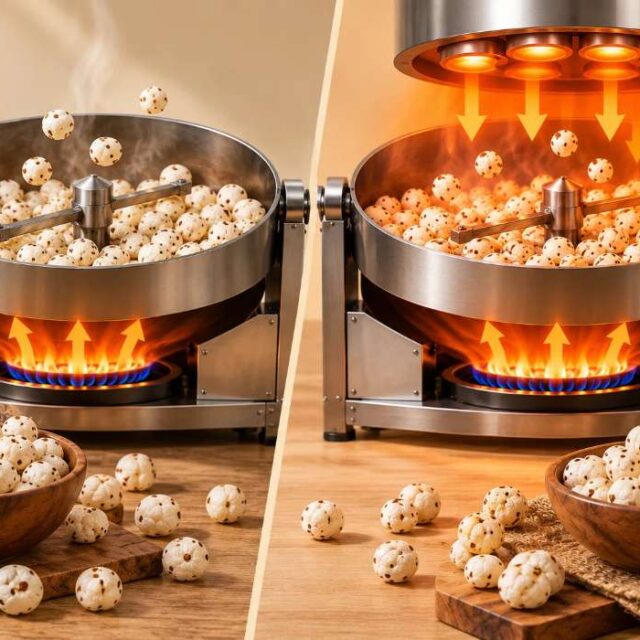
What Is Single vs Double Flame Roasting? A Simple Explanation
Most snack brands say their products are roasted. Very few explain how. When you look at the manufacturing process, the method used to apply…

Why Makhana Is the Fastest Growing Snack Category for Private Label Brands
A few years ago, Makhana was mostly a fasting food. You found it in homes during Navratri, in temple offerings, and occasionally in a…
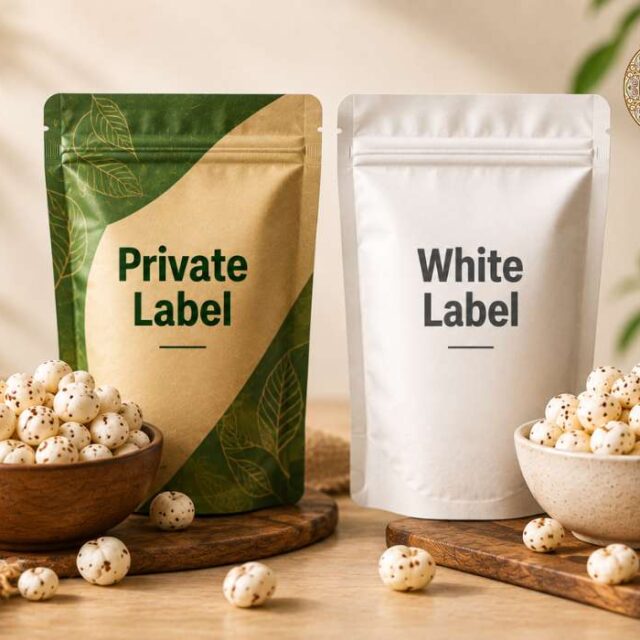
Private Label vs White Label Manufacturing: What Is the Difference?
If you are planning to launch your own snack brand in India, you will come across these two terms Private Label vs White Label…